Table of Contents
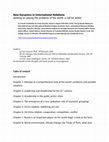
New Dynamics in International Relations Working on Solving the Problems of the World: A Call for Action
The paper explores global challenges, the role of e-leadership, and the divide between fast- and slow-adapting societies. It contrasts Fukuyama’s End of History with Huntington’s Clash of Civilizations, emphasizing the need for proactive, cooperative solutions in addressing issues like poverty and climate change.
The Changing World Order
The world, with a population of 8 billion, faces major challenges requiring urgent attention. The author advocates redirecting resources from military spending to addressing global social and economic issues. The Covid-19 pandemic and the Russia-Ukraine war have caused global instability, impacting energy prices, inflation, and leadership in both developed and developing nations.
Paper on AI
This paper explores the AI revolution, guided by Dr. Hsu and Dr. Frank Owarish, focusing on AI’s impact on industries like robotics, automation, and cybersecurity. It examines leading companies such as OpenAI, Microsoft, and IBM, as well as AI’s influence on education, business, and job creation. The aim is to encourage academics to integrate AI into research and teaching.
AI 2024 Owarish
In 2024, AI is advancing rapidly, and with your expertise in prompt engineering, you’re well-equipped to explore new developments like BARD AI and AI devices tailored for specific industries. What questions do you have about these innovations?
AI 2024 Owarish
In 2024, AI is rapidly evolving. OpenAI is entering the device market, while governments and companies are customizing AI for specific industries like healthcare and defense. Notable examples include AI stethoscopes and autonomous tractors. Vector processing enhances efficiency by processing multiple data points simultaneously, driving innovation across sectors.
New Dynamics in International Relations. It is the Best of Times, it is the Worst of Times
The world faces complex challenges but also sees progress in technology and innovation. While the private sector thrives, the public sector must be more proactive. We need to focus on diplomacy, global cooperation, and addressing inequalities. Constructive leadership is key to solving global issues.
Water and food for all: resolving the issues with thoughtful solutions
The article Water and Food for All discusses global hunger and water scarcity, proposing solutions like hydroponics, desalination, and water pipelines. It emphasizes sustainable infrastructure, international cooperation, and education to combat poverty and malnutrition.
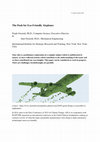
The Push for Eco-Friendly Airplanes
The article discusses efforts to make aviation more eco-friendly, focusing on hybrid-electric aircraft, biofuels, and new technologies like plasma jet engines. It highlights challenges such as slow adoption and high costs but emphasizes the importance of ongoing research and global cooperation to reduce aviation’s carbon emissions.
eLeadership -The Transformation Problem and Possibility: An Agenda for Action
The article explores how leadership and eLeadership are crucial in adapting to technological changes. While countries like Singapore and South Korea have successfully embraced eLeadership, many nations face challenges in transforming leadership structures. The article also highlights the growing influence of social media on political campaigns.
The Changing Realities of the Stock Markets, Financial Advising and Trading
This paper discusses how technology, particularly through mechanical and electrical engineering principles and sophisticated software, is transforming markets, financial advising, and trading. It aims to highlight the key changes affecting the financial sector, providing professionals with a clearer understanding of the evolving landscape, while also offering valuable material for educators teaching in the field.
How to deal with the wave of cyberattacks: Revisiting the Essence of Cyber Security Paper serving as a basis for presentation to the academic conference of BAASANA August 2021
This paper addresses the increasing frequency of cyberattacks, especially during the pandemic. It stresses the importance of proactive cybersecurity, highlighting the need for stronger defenses, regular reviews, and awareness. The paper calls for layered security strategies, investment in protection tools, and collaboration among businesses, universities, and government agencies to mitigate cyber risks.
Primary and Secondary Education in the COVID 19 era: how teachers can maximize the use of instructional technologies
This paper explores the shift to hybrid education in the COVID-19 era, highlighting the need for teacher training, tech support, and student orientation. It discusses how technologies like online platforms and smartphones have transformed education and introduces instructional design models (Dick and Carey, Morrison-Ross-Kemp) to improve teaching effectiveness.
Dealing with the complexity of international trade
This paper explores negotiation strategies for international trade, suggesting applying offline testing, similar to computer science, before implementing changes. It discusses various decision-making approaches, including trial and error, logical-rational methods, adversarial tactics, and Harvard’s BATNA principles.
eBook New dynamics in international relations.docx
This Ebook by Frank Owarish addresses global challenges, focusing on Eleadership, technology, and international relations. It highlights issues like poverty, climate change, and the roles of key global players such as the US, China, and Russia, while advocating for constructive solutions and strengthening international cooperation through the UN.
Frank Owarish - CV 2017 Resume
Frank Owarish – Curriculum Vitae
Frank Owarish - CV 2017 Resume
Frank Owarish – Curriculum Vitae
eLeadership for the 21st Century
This paper examines how leadership must evolve to address the challenges of modern, technological societies. It emphasizes the need for leaders to adapt to the digital era, highlighting the rise of e-leadership and its growing importance in today’s world.
Strategic automotive technologies: the eco-friendly revolution
This paper explores the evolution of automotive technologies, from the internal combustion engine to the shift toward eco friendly innovations. It highlights key milestones such as the Ford Model T and the rise of fuel-efficient cars in response to the 1970s energy crisis. The focus is on the industry’s transition to sustainability.
Strategic leadership of technology - lessons learned
Technological development is driven by strategic planning and leadership, with lessons learned shaping innovation.
What's leading the development of computer technologies in the 21st century: the SoMoClo' Revolution
In the 80s, the convergence of computing and telecommunications sparked the “SoMoClo” revolution, accelerating technology development.
Climate change why it needs urgent attention
The climate is worsening, with extreme weather events on the rise. More action is needed globally and locally to prevent further deterioration.
US China Relations a detailed analysis
This paper examines US-China relations, highlighting the ongoing competition, cooperation, and conflict between the two nations. It discusses China’s rise to global prominence, the shift from socialism to a mixed economy, and the intense competition with the US. The paper explores the historical context of US-China relations and draws lessons from US-Japan relations to offer insights into potential paths for future collaboration.
US China Relations
The article discusses the US China collaboration on climate change, emphasizing their agreement to lead global efforts, turning diplomatic talks into real action for mutual benefit.
eLeadership the transformation problematique
The article discusses the rapid technological evolution of societies and organizations, stressing the importance of leadership and eLeadership in driving transformations at both global and organizational levels. the US China collaboration on climate change, emphasizing their agreement to lead global efforts, turning diplomatic talks into real action for mutual benefit.
The leading edge of computer technologies and applications
The field of technology is evolving rapidly, with exciting advancements ahead. Competition, such as AT&T’s race for gigabit broadband, drives innovation and progress in the industry.
eLeadership for the 21stcentury
Leadership is key to progress, but must adapt to today’s tech driven world, with eLeadership becoming increasingly vital.
The leading edge of computer technologies and applications
This paper examines the evolution of computer technologies, focusing on mobile computing, cloud applications, big data, robotics, cybersecurity, and their impact on industries like finance, travel, and healthcare.
eLeadership in the public sector
The Council serves as the key interagency platform for enhancing federal agencies’ practices in managing the design, acquisition, development, modernization, and performance of government information resources.
eLeadership: efforts to make New York a hi tech hub
New York State and City have the ideal ingredients to become tech hubs, with top universities, established hi-tech companies, and strong leadership. Government efforts are already driving innovation, positioning the U.S. to maintain its global tech leadership
E Leadership efforts to make New York State and New York City hi tech hubs
New York State and City have the key elements to become tech hubs: top-tier educational institutions, a strong presence of hi-tech companies, and effective leadership. With ongoing government initiatives, the U.S. is set to maintain its global tech leadership, driven by eLeadership in IT across various sectors.
New Globalism the emergence of a new globalism with economic groupings as key players
The paper discusses the emergence of a new globalism, where economic groupings like the EU, ASEAN, and BRICS play crucial roles. It highlights the evolution of globalization post-WWII, focusing on the Bretton Woods Agreement and the IMF’s role. The paper explores how these changes shape the global economy, emphasizing the shift towards a more multi-polar world with rising challenges and new economic alliances.
Robotics paper for CASA 2018.docx
This paper discusses the transformative impact of robotics, automated systems, virtual reality, and artificial intelligence. It explores how these technologies are reshaping industries like healthcare, finance, and transportation, highlighting real-life examples like robotic surgery and autonomous flights. The convergence of these technologies is creating a major revolution in business, government, and society.
Major technological revolution underway: 'the era of robotics, automated systems, virtual reality, artificial intelligence'
This paper examines how robotics, automated systems, virtual reality, and artificial intelligence are transforming industries like transportation, finance, and medicine, while also addressing challenges like workforce deskilling and economic impacts.