
Important Considerations
1. Countries in the world have different levels of technological development. Some countries will be producers of the technology and others will be consumers of these technologies. This could exacerbate the Global North and Global South divide. Therefore, there will be a greater role for the World Bank and the UN to manage these inequalities.
2. It is said that “all is fair in love and war”. Therefore, the temptation to bypass ethical rules will be very strong as countries try to maintain qualitative superiority in their weaponry over their adversaries.
This is the era we are in. There are ups and downs, positives and negatives, perhaps more positives. We could set up standards. However, it may be difficult to control the misuse of the new technology. In due time, common sense will prevail.
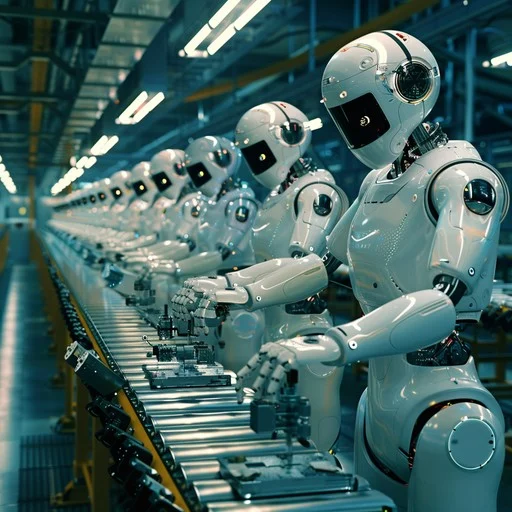
Robotics have grown enormously in recent years and the ongoing developments are amazing. In Japan, robots are now making robots. Initially, there were human-driven algorithms, and now we have AI-driven robots which may be as smart or smarter than humans. China has joined this new generation of robotics.
Food for Thought
This field has taken off and is developing rapidly. However, it seems to have become the domain of countries with wealth and a high level of human capital. The technology is amazing.
On the social side, how much are governments and international bodies

monitoring the possible effects on jobs and international relations?
There is no doubt that the technology is beyond fascinating and it is well worth knowing what the experts in the field are saying.
Human and robot working side-by-side – exploring collaboration over replacement.
Impact on Jobs
It has long been feared that AI-driven technology will make human workers redundant. However, AI robotics will also perform tasks beyond human capabilities, such as: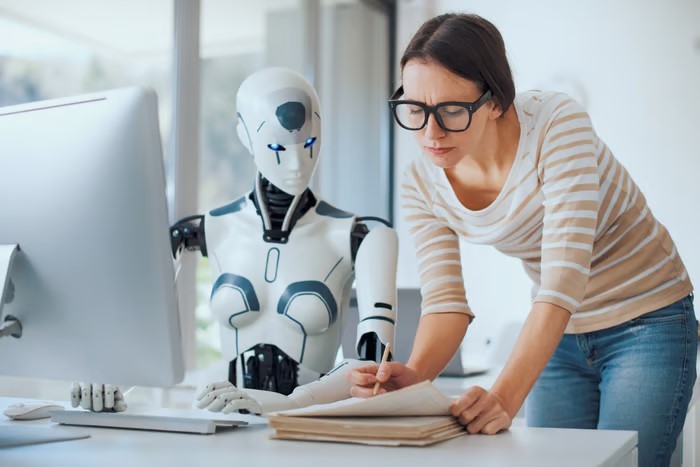
Task requiring very fast data collection
Fast processing and fast decision making both in safe and dangerous environments
Robotics are good for human tasks, which are repetitive, and at time dangerous
Competition between Countries
Competition between countries is intensifying. This situation is not without danger. However, history has shown that this competition has often been the catalyst for rapid progress.
We are in an unstable period both economically and politically. The question is how to create rapid change and maintain stability at the same time.
Perhaps, AI should also be introduced into economics and politics.
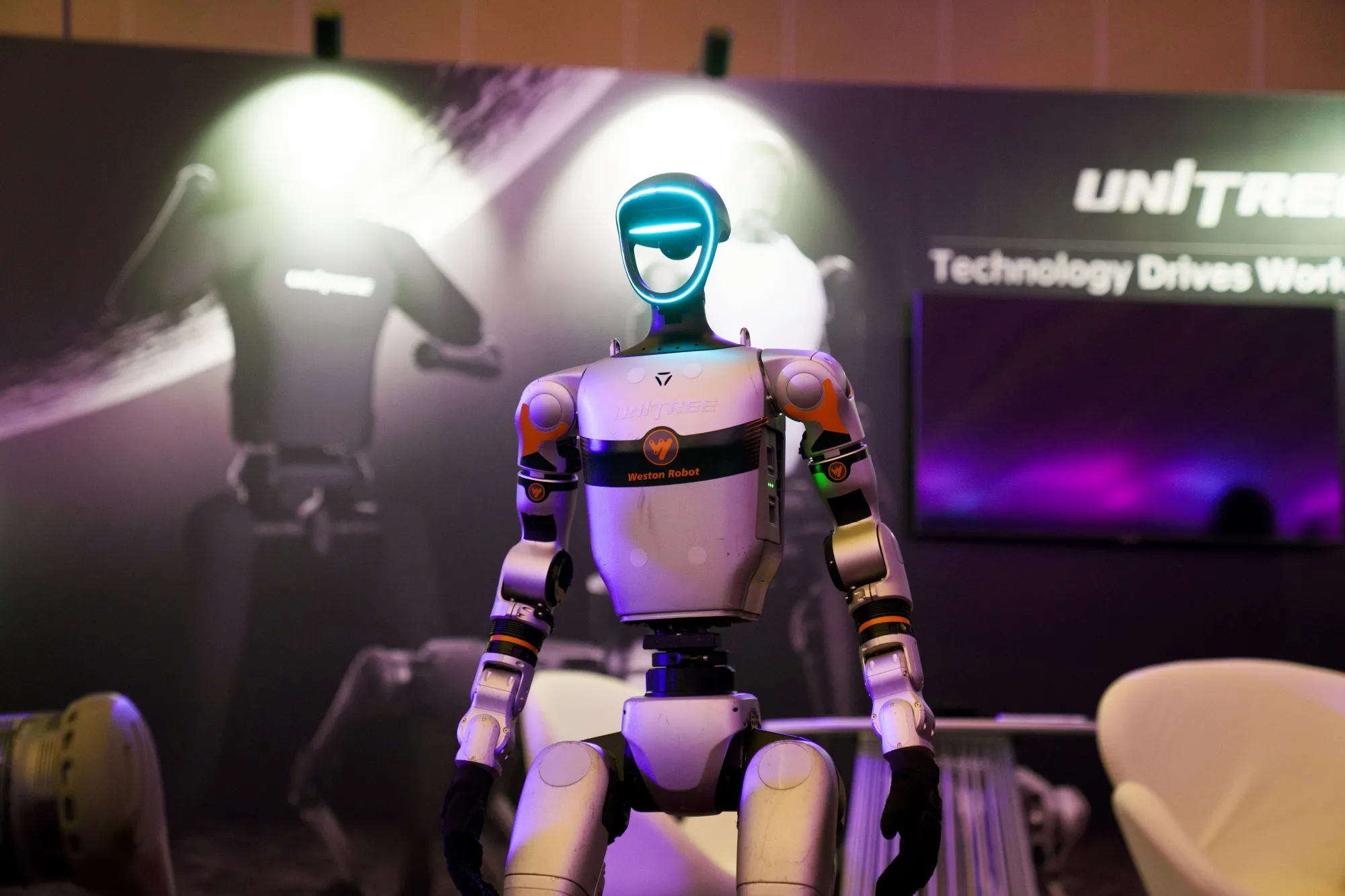
Robotics showcase – representing national competition in AI and automation leadership.
Examples and References:
The Economist – “Xi Jinping’s Plan to Overtake America in AI” (May 25, 2025)
This article outlines China’s strategy to challenge U.S. dominance in AI by replicating Western innovations and making AI models freely available.
TechPolicy.press – “The US Aims to Win the AI Race, But China Wants to Win Friends First” (August 8, 2025)
This piece contrasts the U.S.’s “America First” AI approach with China’s emphasis on global AI governance and collaboration.
Bloomberg – “How the US Could Lose the AI Arms Race to China” (August 12, 2025)
An analysis discussing how China’s focus on broad AI adoption could surpass the U.S.’s emphasis on developing advanced models.
RAND Corporation – “Incentives for U.S.-China Conflict, Competition, and Cooperation” (August 2025)
This report explores potential areas for U.S.-China cooperation in AI, particularly concerning nuclear weapons decision-making.
https://www.rand.org/pubs/perspectives/PEA4189-1.html?utm_source=chatgpt.com
Project Syndicate – “Who’s winning the US-China AI Race?” (July 24, 2025)
This commentary suggests that China’s greater support for basic research positions it better for long-term AI leadership.
Observation about AI
We are still in the age of Weak AI, while Strong AI is a long way off. In the meantime, we have to make the most of Weak AI.
Generative AI is experimental but worthy of exploring.
Weak AI vs Strong AI:
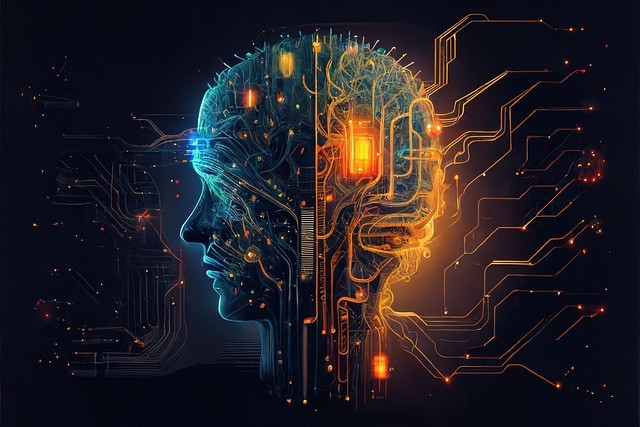 The “Age of Weak AI” currently dominates our landscape, while the “Age of Strong AI” remains largely a theoretical concept. Weak AI, also known as narrow or artificial narrow intelligence (ANI), excels at specific tasks but lacks general intelligence and adaptability. Strong AI, or artificial general intelligence (AGI), would possess human-level intelligence and be capable of performing any intellectual task that a human can.
Here is a more detailed comparison:
Weak AI (Narrow AI/ANI):
• Focus:
Trained to perform specific tasks very well, like image recognition, language translation, or virtual assistance.
• Limitations:
Lacks general intelligence and adaptability, meaning it struggles with tasks outside its trained domain.
• Examples:
Virtual assistants (Siri, Alexa), language translation tools (Google Translate), recommendation systems (Netflix, Spotify).
Strong AI (Artificial General Intelligence/AGI):
• Focus:
A theoretical concept of AI that possesses general intelligence, similar to human intelligence.
• Capabilities:
Capable of learning, adapting to new situations, and applying knowledge to different domains.
• Ideal:
The goal of Strong AI is to create machines that can mimic human intelligence and perform any intellectual task.
• Status:
Not yet achieved, but research continues in this area.
• Understanding Strong vs. Weak AI in a New Light
Oct 30, 2019 — Broad or Strong AI refers to  artificial general intelligence (AGI), which focuses on the creation of machines that can…
Becoming Human
• Strong AI, Weak AI & Super Intelligence
We call a certain type of AI “strong” because we imagine it will be stronger than us. We call it “general” because it will apply t…
The Artificial Intelligence Wiki | Pathmind
• Weak AI vs strong AI – ITWeb
Apr 24, 2024 — Weak AI vs strong AI * Weak AI is still incredibly powerful. Most of today’s AI applications are considered weak AI.
References / Further Reading
UNCTAD. (2025). Technology and Innovation Report 2025. United Nations Conference on Trade and Development.
https://unctad.org/publication/technology-and-innovation-report-2025
Work of United Nations University on AI and Robotics:
The United Nations University (UNU) actively explores the intersection of artificial intelligence (AI) and robotics, focusing on their potential benefits and challenges for society, particularly in areas like sustainable development and humanitarian action. UNU conducts research, facilitates conversations, and develops guidelines to ensure responsible and ethical deployment of these technologies.
UNU’s Focus on AI and Robotics:
• Ethical Considerations:
UNU explores the ethical implications of AI and robotics, ensuring they are used responsibly and do not exacerbate existing inequalities.
https://unu.edu/cpr/blog-post/ai-global-governance-supporting-ties-bind
• Sustainable Development:
UNU investigates how AI and robotics can 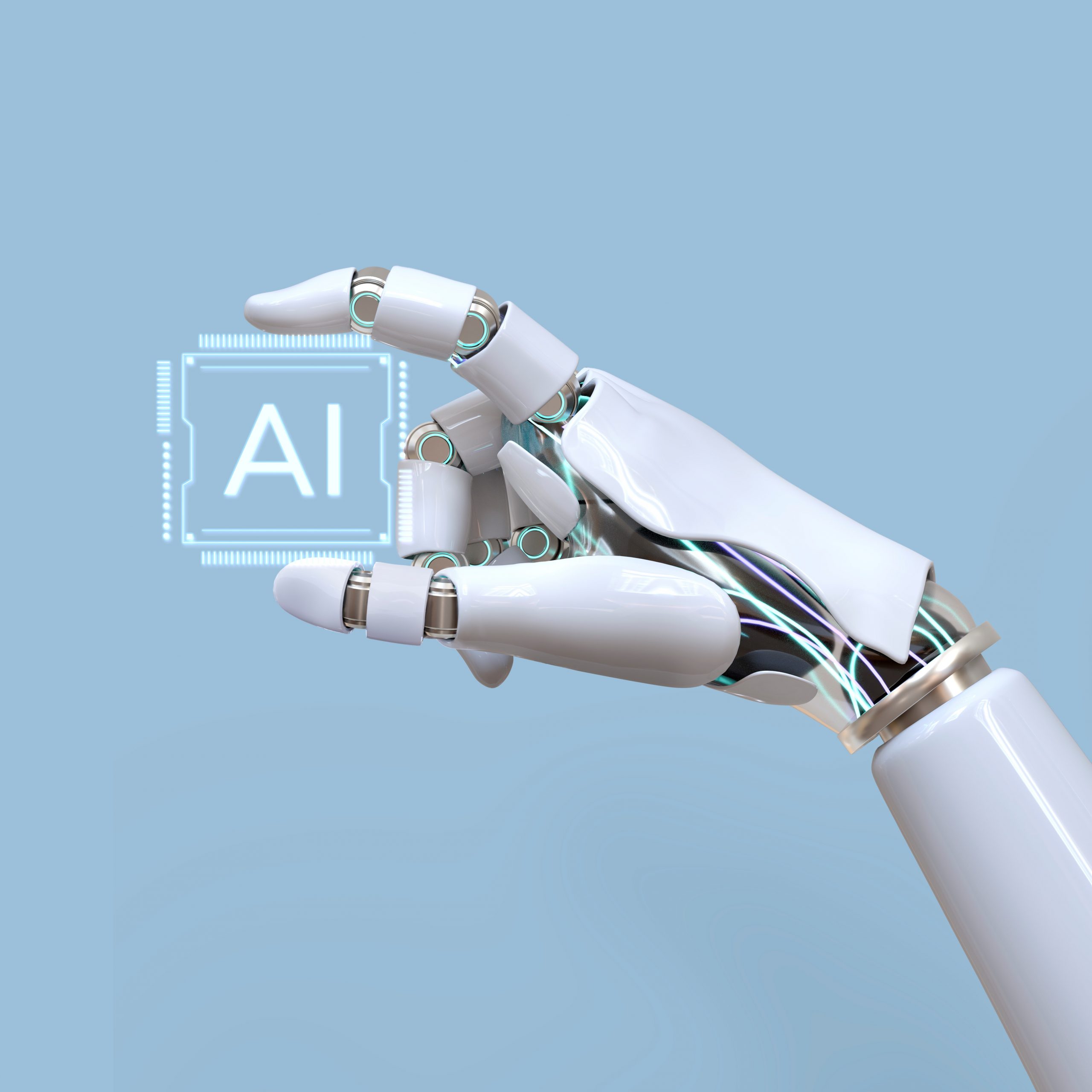 contribute to achieving the Sustainable Development Goals (SDGs) in areas like climate change, agriculture, and education.
https://unu.edu/cpr/project/ai-good
• Humanitarian Action:
UNU examines the potential of AI and robotics to enhance humanitarian efforts, including disaster response, peacekeeping, and development projects.
• Policy and Governance:
UNU works to develop policy recommendations and global guidelines for the responsible development and deployment of AI and robotics.
• Research and Education:
UNU supports research and education initiatives in AI and robotics, fostering innovation and collaboration between academia, industry, and the UN system.
https://unu.edu/merit/governance-innovation
Examples of UNU’s Work in AI and Robotics:
• UNU-Macau AI Conference:
This annual conference brings together experts to discuss the latest advancements and policy directions in AI and robotics.
• UNU AI Network:
This network connects researchers, policymakers, and practitioners to foster collaboration and knowledge sharing in the field of AI.
https://unu.edu/topics/artificial-intelligence
• UNU Conversations Series:
This series hosts conversations on the future of AI and robotics, engaging the public and fostering dialogue.
https://unu.edu/conversation-series/robotics-and-ai-future-today
• HESI Action Group on Futures of Higher Education and AI:
This group explores the impact of AI on higher education and develops recommendations for its responsible integration.
https://unu.edu/article/bridging-digital-divide-education-catalyst-economic-inclusion-and-growth
Key Themes in UNU’s Work:
• AI for Good:
UNU emphasizes using AI to address global challenges and promote human well-being.
https://unu.edu/cpr/project/ai-good
• Responsible Innovation:
UNU advocates for responsible AI development, taking into account ethical, social, and environmental considerations.
https://unu.edu/cpr/blog-post/ai-global-governance-supporting-ties-bind
• Inclusive Development:
UNU strives to ensure that AI and robotics benefit all communities, including those in the Global South.
By actively engaging with AI and robotics, UNU plays a crucial role in shaping a future where these technologies are used to create a more sustainable, equitable, and peaceful world.
UNU and the Militarization of AI:
https://unu.edu/article/militarization-ai-has-severe-implications-global-security-and-warfare
UNU Robotics and AI: The Future Today: https://unu.edu/conversation-series/robotics-and-ai-future-today
UNIDO: Work in AI and Robotics focuses on promoting inclusive AI adoption in developing countries’ manufacturing sectors, particularly through its Global Alliance on Artificial Intelligence for Industry and Manufacturing (AIM Global). This initiative aims to catalyze international partnerships, share best practices, and offer technical assistance to ensure that AI is developed and deployed responsibly and equitably. UNIDO’s efforts are also focused on bridging the AI divide, promoting sustainable industrial development, and reducing socioeconomic disparities.
Chinese humanoid robot running half marathon in Beijing:
https://www.youtube.com/watch?v=zL1a1X3EZj4
Additional exploration of the subject:
“AI-driven robotics refers to robots that utilize artificial intelligence to perceive their environment, make decisions, and perform tasks autonomously or with minimal human intervention, enabling them to be more adaptable and efficient.
AI enables robots to go beyond simple pre-programmed tasks, allowing them to learn, adapt to changing situations, and make decisions based on real-time data.
• Examples of AI-Driven Robots:
• Autonomous Vehicles: Self-driving cars and trucks utilize AI for navigation, obstacle avoidance, and decision-making.
• Robotic Assistants: Robots like Amazon’s Astro and Airbus’ CIMON-2 are designed to assist humans with tasks and provide companionship.
• Industrial Robots: AI-powered robots are used in manufacturing for tasks like welding, painting, and assembly, improving efficiency and quality.
• Healthcare Robots: Robots are used in healthcare for tasks like surgery, rehabilitation, and patient care.
• Exploration Robots: Robots are used in space exploration and other hazardous environments to collect data and perform tasks that are too dangerous for humans.”
(credit Google generative AI)
Where Is Automation Headed?
As a leader in automation, orchestration and AI, SS&C Blue Prism is uniquely placed to give you the inside track on what’s next in the world of automation. We’ve gathered data from analysts and asked thought leaders across SS&C Blue Prism about where they see automation heading in 2025. The result is a must-read e-book of seven trends that are designed to help you decide where to focus your efforts in the next year. The e-book gives you everything you need to know to stay ahead in 2025 — from taking advantage of developments in agentic AI to why governance and security frameworks will be key for success. Download this e-book to get the foresight you need.
NVIDIA is also doing work in this area.
https://www.youtube.com/watch?v=BFiBZI3nqhQ
Japan AI driven robotics (illustration)
https://www.youtube.com/results?search_query=Japanese+AI+driven+robotics
China AI driven robotics (illustration)
https://www.youtube.com/watch?v=aUWOWhwG-bk
CES 2025 highlights
US Robotics Companies push for a national strategy, including a central office, to compete with China.
Dilemmas?
It is uncertain whether the ethical or moral questions surrounding conflict driven by algorithms and machines without human intervention can ever be answered. The use of automated drones, which are not weapons themselves but rather platforms to deliver weapons, is not specifically regulated under international law. Although the use of drones is governed by the same principles of all weapons under international law—namely, the rules of distinction, proportionality, and prohibition of indiscriminate attacks—the absence of any specific laws makes regulation exceedingly difficult. The international community must establish an international legal framework that ensures humans always retain meaningful control over AWS and that systems do not select military targets during conflict autonomously.
The GGE’s latest report, published in 2023, emphasizes that legal measures must exist to restrict the use of “weapon systems based on emerging technologies in the area of lethal autonomous weapons systems that, once activated, are able to identify, select, track, and apply force to targets, without further human intervention.” As an unprecedented innovation in the weaponry of war, AWS requires a new international legal framework that is robust and flexible enough to keep pace with the breakneck pace of technological progress. The GGE, therefore, must continue to push the UN to adopt a new international legal framework that restricts the development and use of AWS in modern warfare.
Kristian Humble is an Associate Professor of International Law in the School of Law and Criminology at the University of Greenwich, London. He is widely published on topics within international law including human rights, artificial intelligence, the right to privacy, populism, modern warfare and international relations. He is also a contributor to the House of Lords Select Committee on Artificial Intelligence in Weapon Systems.”
https://drive.google.com/file/d/1QxdviHdL8d3CfoAVGuKLydyS0vNTr_-t/view
https://www.gre.ac.uk/people/rep/las/kristian-humble
(Georgetown Journal of International Affairs)
BROBOT: US new humanoid robot comes with situational awareness
(Interesting Engineering)
Can China repeat its EV success in humanoid robots? (TECH ASIA)
AI powered industrial super-humanoid robot
https://www.foxnews.com/tech/worlds-first-ai-powered-industrial-super-humanoid-robot
US firm’s humanoid robot enters into film production, shoots for the first time (Interesting Engineering)
We are among those laying the foundation stones of this technological intricacy. We pinpointed many benefits. However, we also underscored that the technology could be used, unfortunately, in warfare
Center for the Study of Automated Systems by Frank Owarish, Ph.D., Computer Science and Sam Owarish, Ph.D., in Mechanical Engineering.
https://internationalinstituteforstrategicresearch.info/center-for-the-study-of-automated-systems/
Reality: https://www.axios.com/2025/05/25/manufacturing-robots-trump-china
Good use: https://www.foxnews.com/tech/delivery-robot-autonomously-lifts-transports-heavy-cargo